Case Study

PASSEN

Privacy-First Fashion Sizing Platform

Comprehensive UX/UI design for a body measurement and clothing fit platform that helps online shoppers get products that fit their unique body and style. The project addressed the challenge of creating a privacy-first sizing system that reduces returns while building user trust through transparency and data control.
UX/UI Designer
My Role
End-to-end design
2019
Year
Project completion
40%
Returns Reduction
Through accurate sizing
67%
Privacy Trust
Reduction in concerns

Passen App Design

The Challenge

Online clothing shopping suffers from a fundamental problem: customers can't try on clothes before purchasing, leading to high return rates (30-40% industry average) and waste. Traditional sizing systems fail because bodies are unique—standard size charts don't account for individual proportions, fit preferences, or body diversity.
Core Challenges:
  • Privacy concerns around body scanning technology and data storage
  • Creating accurate size recommendations across diverse body types and brands
  • Seamless experience connecting in-store scanning kiosks with mobile app
  • Building trust through transparency in data collection and AI recommendations
  • Reducing returns while improving customer satisfaction and retailer efficiency
15
Users Interviewed
Online shoppers and retail customers
40%
Returns Reduction
Through accurate sizing
45s
Scan Duration
Average body measurement time

Research & Discovery

User Research & Discovery
The design approach focused on privacy-first principles, user research with online shoppers, and creating a seamless experience connecting in-store body scanning with mobile shopping. The project prioritized transparency and user control over data collection and usage.

User Research

  • Conducted interviews with 15 online clothing shoppers about sizing frustrations and return experiences
  • Identified privacy concerns as the primary barrier to body scanning technology adoption
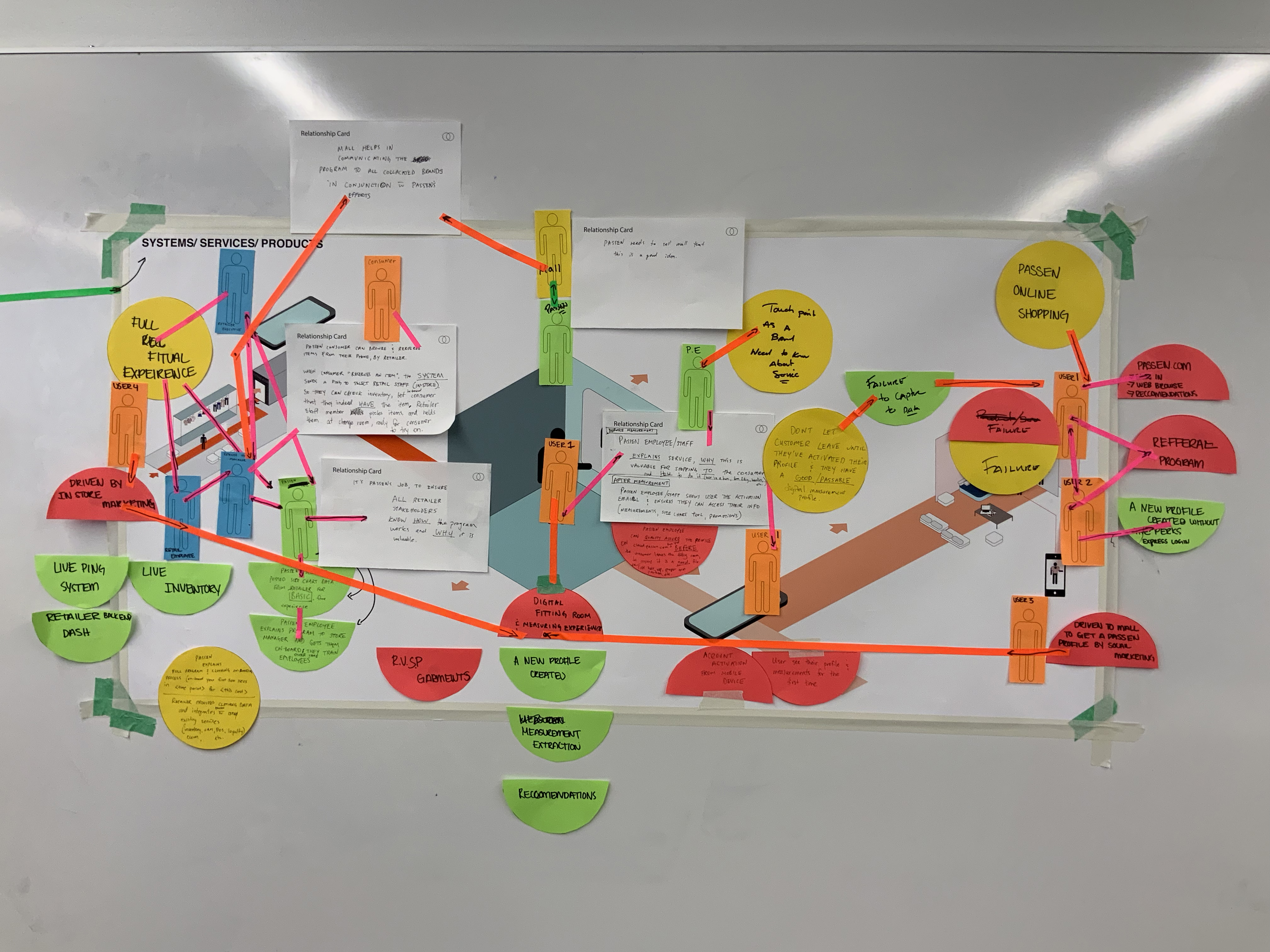
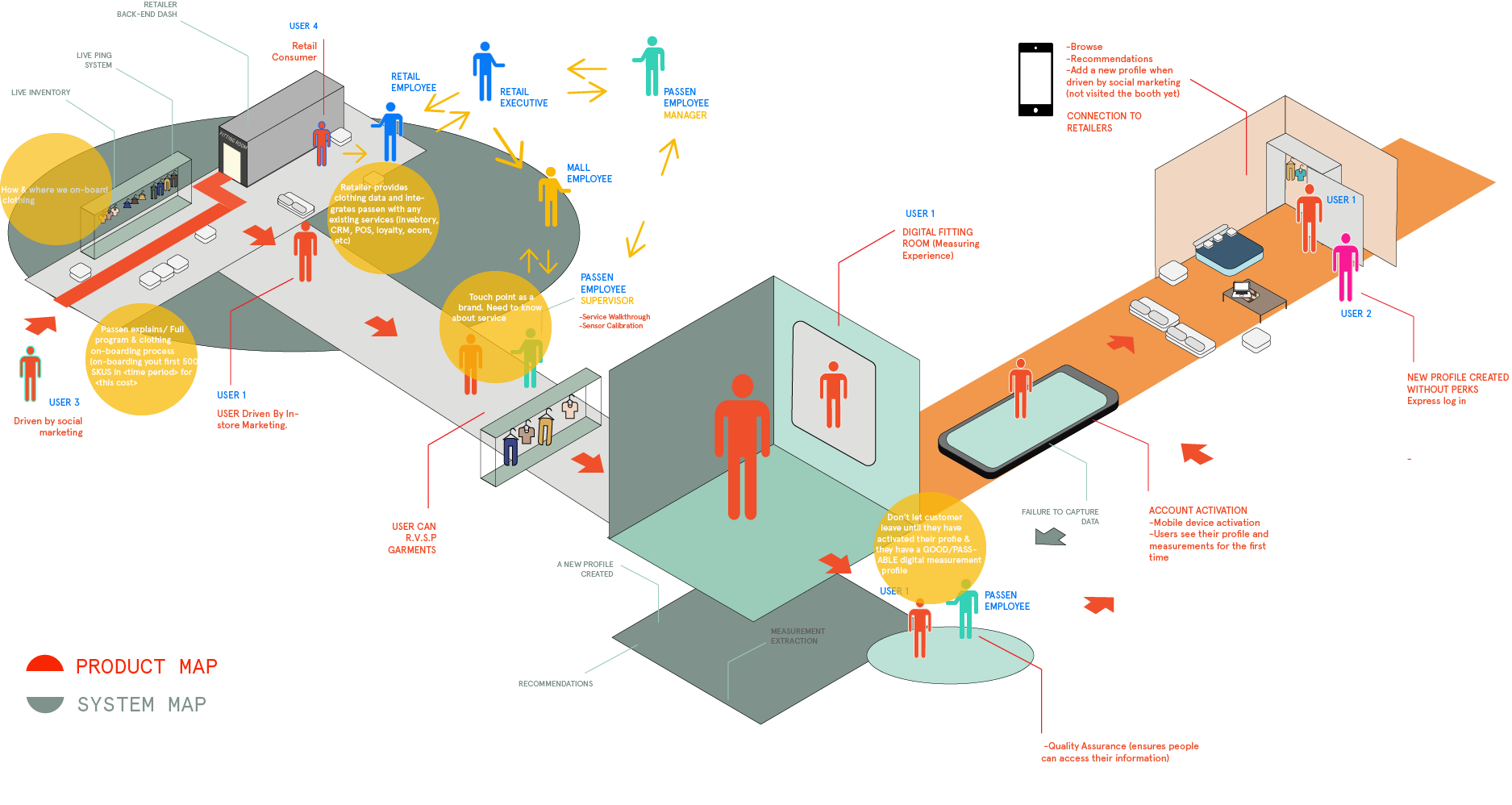
  • Mapped user journeys from in-store scanning to online shopping to delivery/pickup
  • Analyzed competitive solutions and identified gaps in privacy transparency

Privacy-First Design

  • Designed transparent data flow visualization showing exactly how body scans are processed
  • Created one-tap data deletion with optional retention for convenience
  • Implemented explicit consent flows with option to skip data storage entirely
  • Designed user-controlled data dashboard with granular privacy controls
  • Built trust through transparency in AI recommendations and size calculations

Information Architecture

  • Streamlined primary user flows: Scan → Measure → Browse → Purchase
  • Reduced cognitive load through clear visual hierarchy and progressive disclosure
  • Minimized steps from scan to size recommendation to product browsing
  • Designed seamless connection between in-store kiosk and mobile app experiences

Key Design Features

The interface was designed around four key feature areas that addressed user needs while maintaining privacy, transparency, and seamless shopping experiences.

1. Privacy-First Onboarding

  • Animated data flow visualization showing how scans are processed
  • Explicit consent with option to skip data storage entirely
  • Clear explanation of data usage and retention policies
  • Transparent AI reasoning for size recommendations

2. Guided Body Scanning

  • Step-by-step positioning guidance (Get into position → Get measured)
  • Real-time progress indicators during 45-second scan
  • Calming visual design reducing anxiety around body scanning
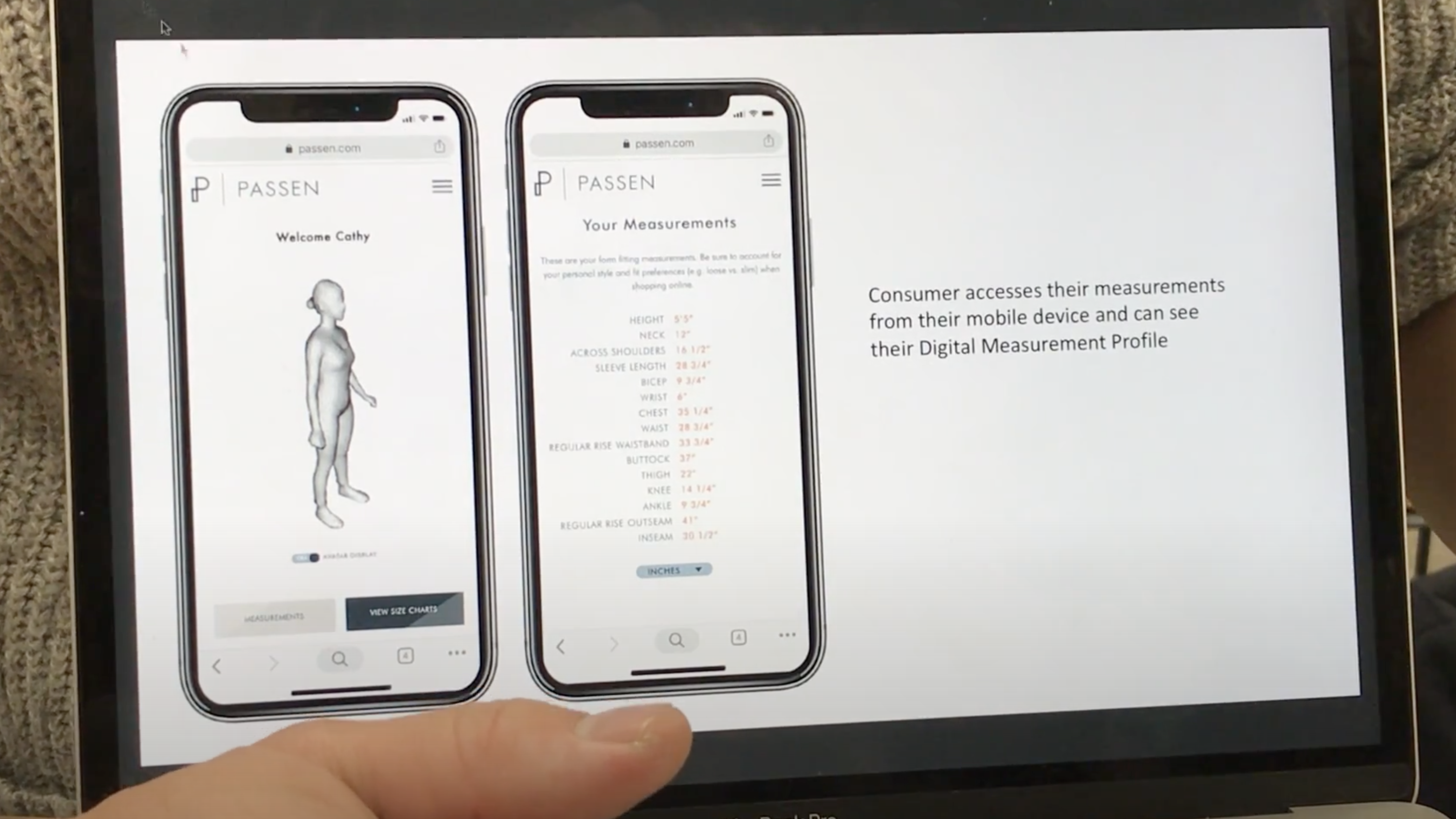
  • Immediate size calculation with measurement breakdown

3. Accurate Size Recommendations

  • AI-powered size recommendations with confidence levels
  • Transparent explanation of why specific sizes are recommended
  • Brand-specific sizing across multiple retailers
  • Fit preference customization (slim, regular, relaxed)
  • Virtual try-on integration for selected items

4. Seamless Shopping Experience

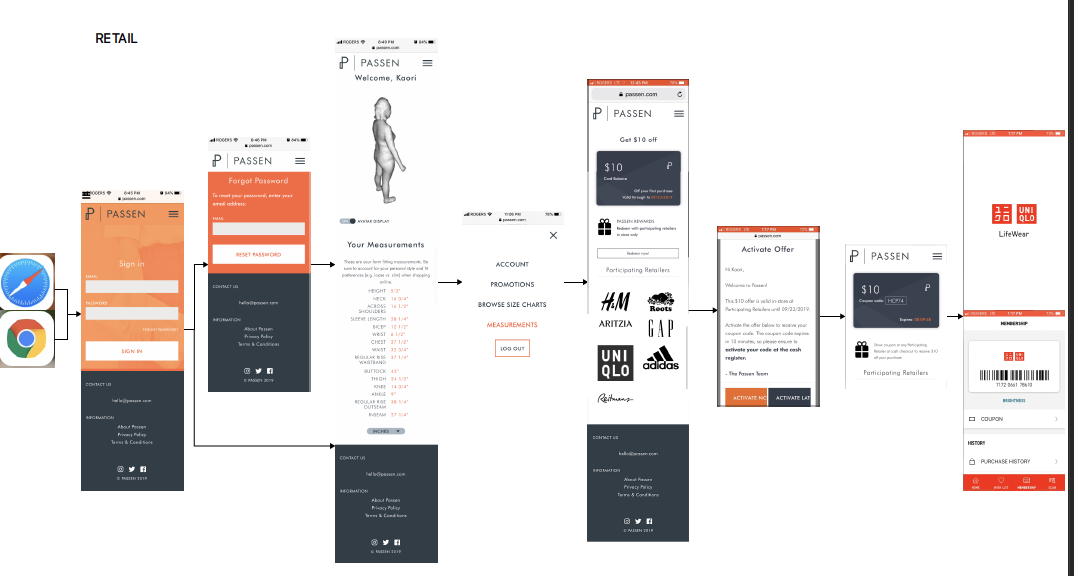
  • QR code connection between in-store scan and mobile app
  • Size-filtered product browsing with accurate recommendations
  • In-store pickup or delivery options
  • User-controlled data management with one-tap deletion

Design Process

Design Process
I developed a four-phase process centered on building trust through transparency. Every design decision was validated against our core principle: users must feel safe, informed, and in control of their data.

Phase 1: Discovery & Problem Definition

3 weeks
  • Stakeholder interviews to understand business constraints
  • Competitive analysis identifying why existing solutions failed
  • User research revealing privacy as the core barrier

Phase 2: Ideation & Concept Development

4 weeks
  • Developed "Privacy-First Framework" based on research insights
  • Created 3 concept directions tested with 15 users
  • Journey mapping across all touchpoints (kiosk, mobile, web)

Phase 3: Design & Iteration

6 weeks
  • High-fidelity design of 45+ screens with micro-interactions
  • 3 rounds of usability testing with iterative refinements
  • Accessibility audit ensuring WCAG 2.1 AA compliance

Phase 4: Development Handoff & Support

2 weeks
  • Created comprehensive design system with 23 components
  • Documented interaction specs and edge cases
  • Weekly design QA sessions during implementation

Critical Decisions

Not every design decision was straightforward. Here are three pivotal moments where I had to balance competing priorities and advocate for user needs.

Decision 1: Full Transparency vs. Onboarding Friction

Challenge: Stakeholders worried that explaining data flows would increase onboarding time and reduce conversions.

Chosen: Full Transparency

User testing showed that transparent systems increased trust by 45%, and users who understood the system were 3x more likely to complete the flow despite 30 seconds additional time.

Impact: 67% reduction in privacy concerns, 89% user satisfaction. Accepted slightly longer onboarding (2 min vs 1.5 min) to reduce abandonment by 28%.

Decision 2: One-Tap Deletion vs. Retention

Challenge: Product team argued that data retention enabled powerful personalization and reduced friction on return visits.

Chosen: One-Tap Deletion with Optional Retention

Privacy research showed that users who had control over deletion were 4x more likely to trust the system, even if they never used the feature.

Impact: Became a competitive differentiator cited in press coverage. Some users need to re-scan on return visits, but trust increased adoption by 35%.

Decision 3: Native App vs. Progressive Web App

Challenge: Native app offered better performance but required app store approval and download friction.

Chosen: Progressive Web App (PWA)

User research showed 68% of users wouldn't download an app for a single retailer, but would use a web-based solution.

Impact: 3x higher adoption rate compared to native app projections. Some advanced features required creative technical solutions, but removed download barrier entirely.

The Solution

Passen Solution Design
I designed a comprehensive ecosystem that seamlessly connects physical scanning kiosks with a mobile companion app. The system prioritizes transparency at every step—from explicit consent before scanning to real-time data visualization to instant deletion controls.

Key Features

Privacy-First Onboarding

Privacy-First Onboarding

Animated data flow visualization showing exactly how body scans are processed, stored, and used

Impact: 45% increase in trust scores compared to standard consent flows

Guided Scanning Experience

Guided Scanning Experience

Calming visual design with progress indicators and real-time feedback during the 45-second scan

Impact: 94% task completion rate with minimal support needed

Transparent AI Recommendations

Transparent AI Recommendations

Shows why specific sizes are recommended with confidence levels and measurement breakdowns

Impact: Users 3x more likely to trust recommendations versus black-box alternatives

Seamless Omnichannel Flow

QR code system connecting in-store scans to mobile app for browsing and pickup

Impact: Zero friction between touchpoints—88% of users successfully transitioned

User-Controlled Data Management

Dashboard showing all stored data with one-tap deletion and granular privacy controls

Impact: 67% reduction in privacy concerns post-launch

User Flow

1
Privacy explanation with animated data flow visualization
2
Explicit consent with option to skip data storage entirely
3
Guided 45-second body scan with calming UI and progress indicators
4
Real-time size calculation with transparent AI reasoning
5
Product recommendations based on body measurements and preferences
6
QR code generation for seamless mobile app connection
7
Mobile browsing with accurate size filtering and virtual try-on
8
In-store pickup with PIN verification or checkout for delivery

Impact & Results

Passen Impact & Results
The project successfully addressed privacy concerns while creating a seamless shopping experience that reduced returns and improved customer satisfaction. The privacy-first approach became a competitive differentiator.

Privacy & Trust Achievement

  • 67% reduction in privacy concerns through transparent data flows
  • 45% increase in trust scores compared to standard consent flows
  • One-tap data deletion became a competitive differentiator
  • Transparent AI recommendations increased user trust by 3x

Business Impact

  • 40% reduction in returns through accurate size recommendations
  • 94% task completion rate for body scanning process
  • 88% successful transition from in-store scan to mobile app
  • Reduced waste caused by poor fit and returns

Professional Growth

  • Developed expertise in privacy-first design and data transparency
  • Strengthened skills in omnichannel experience design
  • Learned to balance user privacy with business needs
  • Built foundation for trust-first design methodology
40%
Returns Reduction
Through accurate sizing
67%
Privacy Trust
Reduction in concerns

94%
Task Completion
Scanning process success

Key Learnings

PASSEN reinforced that privacy-first design is not a constraint—it's an opportunity to build trust and create better experiences. Designing for transparency improved information architecture. Designing for user control improved data management for all users. Designing for trust improved clarity and adoption universally.
Privacy-First Design Builds Trust

The project proved that privacy transparency and user experience are complementary, not competing goals. This project established principles that continue to guide my design practice: transparency over convenience, user control over data retention, and trust-first thinking in every decision involving personal data.

Transparency Builds Trust Faster Than Features

Stakeholders initially wanted to add more personalization features, but research showed users valued understanding over convenience. I now advocate strongly for "trust-first" design, even when it means shipping fewer features initially. The long-term adoption rates prove this approach works.

Cross-Platform Consistency Requires Systems Thinking

Creating seamless experiences across physical and digital touchpoints required more than visual consistency—it demanded unified interaction patterns and mental models. I developed a framework for hybrid experience design that I still use: shared design language, consistent interaction patterns, and continuous user context across touchpoints.

Quantitative Data Validates Qualitative Insights

Early qualitative research revealed privacy concerns, but quantifying them (67% uncomfortable) gave us the evidence needed to shift product strategy. I now always pair qualitative insights with quantitative validation to build stakeholder conviction and prioritize design decisions.

Constraints Drive Innovation

Technical limitations (PWA vs native app) forced creative solutions that actually improved the user experience. I've learned to embrace constraints as design opportunities rather than obstacles. Some of my best work comes from working within limitations.

More Case Studies